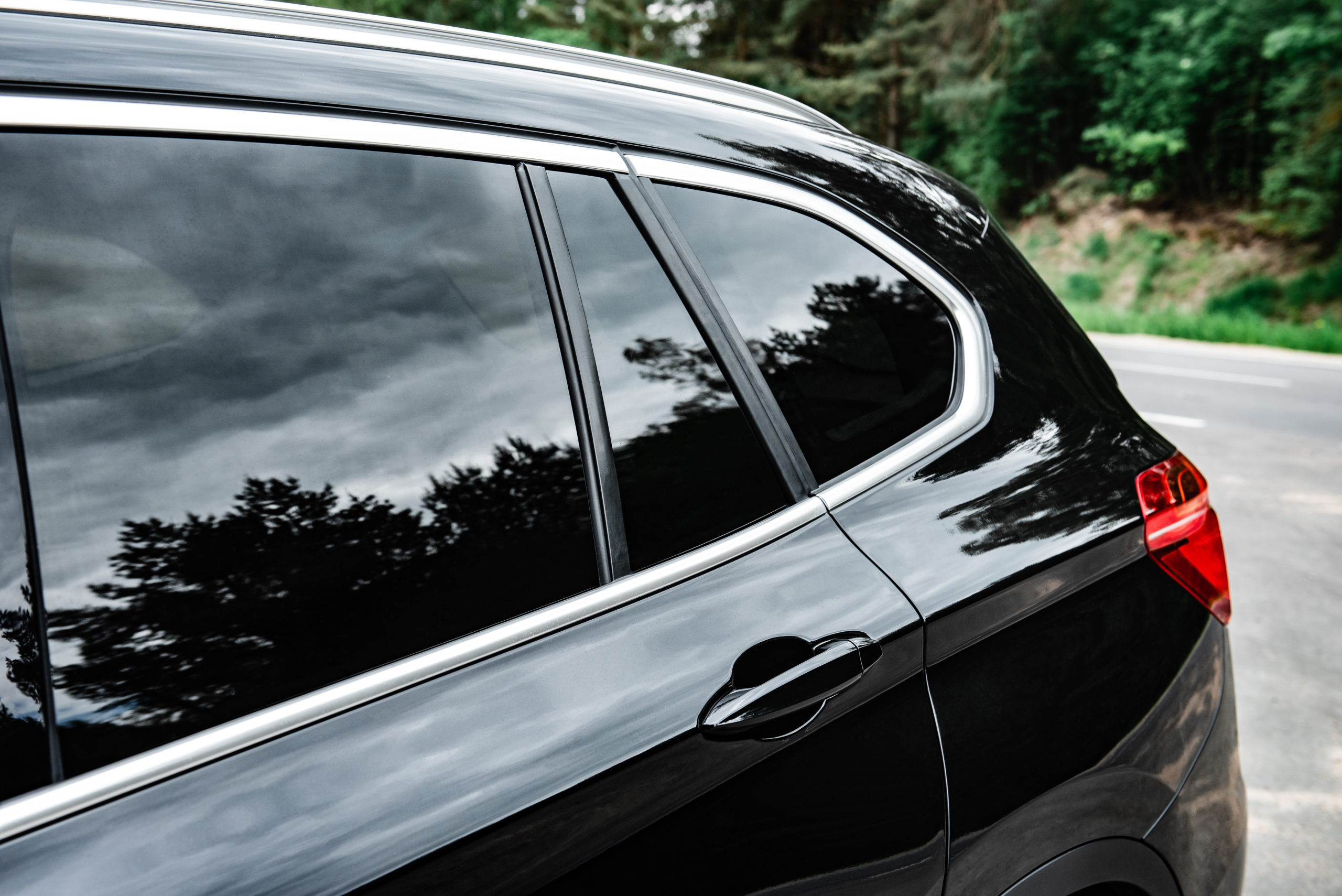
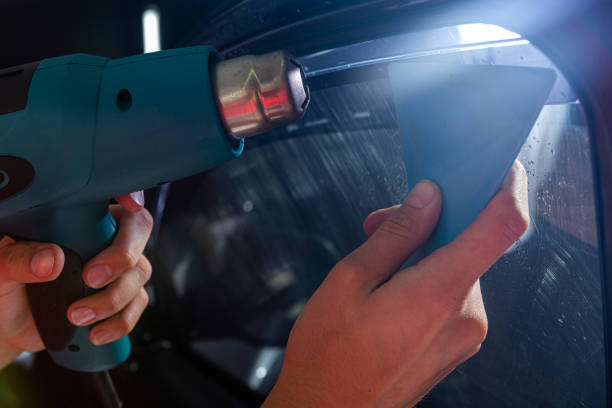
Quick AnswerGeorgia requires a minimum of 32% VLT (Visible Light Transmission) on front side windows for all vehicles. Back side windows and rear windows follow different rules depending on whether you drive a sedan or an SUV/truck. There is no statewide ban on windshield tint above the AS-1 line. These limits are set by O.C.G.A. § 40-8-73.1 and have been in effect since 2005. |
If you’re wondering what the legal tint in GA is before booking an appointment or if you just got a tint ticket and want to understand the law, you’re in the right place. Georgia’s window tint regulations are set forth in O.C.G.A. § 40-8-73.1 and apply to every vehicle registered or driven in the state. The rules haven’t changed since 2005, but confusion is common because the limits vary by window position and vehicle type.
Below, we break down everything: VLT percentages for each window, what happens if you get pulled over, how medical exemptions work, and how to ensure your tint is installed right the first time. At G Force Films in Savannah, our window film specialist, Craig, has over 26 years of experience helping drivers across Savannah, Pooler, and Rincon get the darkest legal tint in GA without risking a ticket. Every installation is verified with a calibrated tint meter and documented in the CARFAX report, so you have proof of compliance if you’re ever stopped.
Understanding VLT: What the Numbers Mean
VLT stands for Visible Light Transmission. It’s the percentage of visible light that passes through your window film and glass combined. A lower VLT number means a darker tint.
Here’s what the most common VLT levels actually look like:
VLT | Appearance | Light Blocked |
5% (Limo) | Very dark, hard to see inside | 95% of the light is blocked |
20% | Dark is visible up close only | 80% of the light is blocked |
32% | Medium Georgia's front window legal limit | 68% of light blocked |
50% | Light tint, mostly cosmetic | 50% of the light is blocked |
70% | Nearly clear UV/heat rejection focus | 30% of the light is blocked |
Important: VLT is measured as the combined transmission of the film and the factory glass. Most factory glass already blocks some light (typically around 70–80% VLT). That means if you apply a film rated at 45% VLT to glass that already transmits only 75% of light, your combined VLT is roughly 34% (0.45 × 0.75 = 0.34). This math is exactly why professional installation matters. A qualified installer takes your specific vehicle’s factory glass into account when selecting film.
Georgia Window Tint Laws by Vehicle Type
Georgia law separates vehicles into two categories with different tint allowances. The front side windows must always allow at least 32% VLT (with a ±3% tolerance built into the statute), but the rear windows have different requirements depending on your vehicle classification.
Passenger Vehicles (Sedans, Coupes, Hatchbacks)
Window Position | Minimum VLT | Notes |
Windshield | AS-1 line only | Non-reflective tint above the top 6 inches only; no VLT % required for this strip |
Front Side Windows | 32% VLT | Georgia's front window legal limit |
Back Side Windows | 32% VLT | Same as front for sedans, no additional flexibility |
Rear Window | 32% VLT | Same limit across all windows |
For sedan drivers, the rule is straightforward: every window except the windshield strip must allow at least 32% of visible light through. That means you cannot legally go darker than 32% VLT on any window front, back, or rear.
Multi-Purpose Vehicles (SUVs, Trucks, Vans)
Window Position | Minimum VLT | Notes |
Windshield | AS-1 line only | Same as sedans |
Front Side Windows | 32% VLT | Georgia's front window legal limit |
Back Side Windows | Any darkness | No VLT limit includes 5% limo tint |
Rear Window | Any darkness | Must have dual side mirrors if below 32% |
This is where Georgia law gives SUV and truck owners a significant advantage. While front-side windows still require 32% VLT, you can install any darkness on the back-side windows and rear window, including 5% limo tint. The only catch: if your rear window tint reduces visibility below 32%, Georgia requires dual side mirrors (which most SUVs and trucks already have as standard).
This sedan-vs-SUV distinction is the single most common source of tint confusion in Georgia. Many drivers see dark rear tint on an SUV and assume they can apply the same film to their Camry or Accord, which leads directly to a ticket. If you drive a sedan and want maximum darkness, 32% VLT across every window is as dark as you can legally go.
Want the darkest legal tint installed right the first time? Call Craig at (912) 655-2888 or get in touch online. →
Reflectivity and Color Restrictions in Georgia
Beyond VLT darkness, Georgia also regulates how reflective your tint can be and which colors are allowed. Many competitor guides skip this section, but these rules matter especially if you’re shopping for film online or considering a mirror-finish tint.
- Reflectivity limit: Window tint on any window cannot exceed 20% reflectivity. Highly mirrored or chrome-style films are not legal in Georgia, even if they meet VLT requirements. The 20% reflectivity cap is spelled out in O.C.G.A. § 40-8-73.1(b)(2).
- Prohibited colors: Red and amber tint colors are not permitted on any window in Georgia. These colors can interfere with the visibility of brake lights and turn signals from behind, which is why the statute specifically bans them.
At G Force Films, we exclusively install XPEL PRIME window films, which are engineered to meet all state reflectivity and color requirements while providing superior heat rejection (up to 98% infrared rejection on the XR Plus line) and 99% UV protection.
Complete Georgia Window Tint Comparison Chart: Sedans vs. SUVs
This side-by-side chart is the fastest way to see exactly what’s legal for your vehicle type in Georgia:
Window Position | Sedans / Coupes / Hatchbacks | SUVs / Trucks / Vans |
Windshield | Non-reflective tint above AS-1 line only | Non-reflective tint above AS-1 line only |
Front Side Windows | 32% VLT minimum | 32% VLT minimum |
Back Side Windows | 32% VLT minimum | Any darkness allowed |
Rear Window | 32% VLT minimum | Any darkness allowed |
Max Reflectivity | 20% | 20% |
Restricted Colors | Red, Amber | Red, Amber |
*Dual side mirrors required if rear window tint is below 32% VLT.
Is 5% Tint Legal in Georgia?
No, not on front side windows. A 5% tint (often called “limo tint”) allows only 5% of light through, well below Georgia’s 32% VLT requirement for front windows. However, if you drive an SUV, truck, or van, you can legally install 5% tint on the back side windows and rear window.
This is one of the most popular configurations we install at G Force Films for customers in Savannah, Hinesville, and the Fort Stewart area: 32% XPEL PRIME on the fronts and 5% on the rears. It gives you maximum privacy where the law allows, while keeping the front windows fully compliant.
Is 20% Tint Legal in Georgia?
On front side windows, no. 20% VLT does not meet Georgia’s 32% minimum for front windows on any vehicle type. On the rear windows and back-side windows of SUVs, trucks, and vans, 20% tint is perfectly legal. For sedan owners, 20% would also violate the law with all windows open.
One thing worth noting: many vehicles come from the factory with a light tint on the rear windows (usually around 15–20% VLT). This factory tint is exempt from state tint law under O.C.G.A. § 40-8-73.1(c) because it was applied before delivery. But if you add aftermarket film over factory tint, the combined VLT must still meet legal minimums on the windows where limits apply.
How Georgia Compares to Neighboring States
If you drive between Georgia, Florida, and South Carolina as many coastal Georgia and Hilton Head residents do, it helps to know how each state’s tint rules compare. A tint setup that’s legal at home can get you a ticket across the state line:
Rule | Georgia | Florida | South Carolina | Alabama |
Front Side VLT | 32% | 28% | 27% | 32% |
Rear Side VLT (Sedan) | 32% | 15% | 27% | 32% |
Rear Side VLT (SUV) | Any | 6% | Any | Any |
Rear Window (SUV) | Any | 6% | Any | Any |
Max Reflectivity | 20% | 25% front | Non-reflective | 20% |
Banned Colors | Red, Amber | Red, Amber, Blue | Red, Amber, Yellow | Red, Amber |
Medical Exemption? | Yes | Yes | Yes | Yes |
Key takeaway for coastal Georgia drivers: Florida allows darker front windows (28%) than Georgia (32%), and South Carolina is even more permissive at 27%. If you had your windows tinted in Florida or South Carolina, your front tint may technically be illegal in Georgia. Conversely, a Georgia-legal 32% tint will pass in all neighboring states.
Georgia Tint Ticket Fines and Penalties
Wondering how much a tint ticket costs in Georgia? The penalties are steeper than most people expect, especially for repeat offenses. Under O.C.G.A. § 40-8-73.1, a window tint violation is classified as a misdemeanor:
Offense | Fine Range | Additional Consequences |
First offense | $25 – $100 | May be required to remove tint; possible court costs |
Second offense | $100 – $200+ | Ordered to remove illegal tint |
Multiple violations | Up to $1,000 | Misdemeanor charge; up to 12 months imprisonment possible |
Officers use a portable tint meter to measure VLT during traffic stops. If your tint reading falls below 32% on the front windows (accounting for the ±3% tolerance), you’ll receive a citation. Some counties are stricter about enforcement than others, but in the Savannah metro area and along I-95 and I-16, tint stops are common.
Beyond the fine itself, you’ll likely need to pay for tint removal and reinstallation with a legal film, which often costs more than doing it right the first time. According to Georgia criminal defense attorney Kevin Fisher, tint violations are classified as misdemeanors, like other traffic offenses, meaning a conviction goes on your criminal record and requires fingerprinting.
Every tint installation at G Force Films is measured with a calibrated tint meter to verify legal compliance before you leave. We also document every installation in CARFAX, giving you a verifiable record if you’re ever questioned during a traffic stop.
Medical Exemptions for Window Tint in Georgia
Georgia allows medical exemptions for darker window tint under specific conditions. If you have a medical condition that requires protection from sunlight, such as lupus, severe photosensitivity, melanoma risk, or certain dermatological conditions, you may qualify for a tint exemption through the Georgia Department of Public Safety (DPS).
How to apply for a Georgia tint medical exemption:
- Obtain a written attestation from a licensed physician (M.D.) or certified optometrist specifying your medical diagnosis and the level of tint protection required.
- Complete the DPS-431 application form, available from the Georgia Department of Public Safety.
- Submit the application along with the $10 fee (money order, certified check, or cashier’s check only, no personal checks) to: Department of Public Safety, Attention: Office of Professional Standards, Window Tint.
- Carry the approved exemption documentation in your vehicle at all times. Officers can request it during any traffic stop.
Critical limitation: Even with a medical exemption, Georgia law sets a floor: the exemption cannot allow tint darker than 23% VLT on the front side windows, and no tint is permitted on the windshield below the AS-1 line under any circumstances. The exemption applies to a specific vehicle and must be renewed in accordance with DPS guidelines.
This 23% floor is important to know because it means even medically exempt drivers cannot install 5% limo tint on the front windows. If your exemption paperwork specifies a particular VLT, your installed film needs to match that level precisely, which is another reason professional installation matters.
Can You Get Pulled Over for Tint in Georgia?
Yes. Window tint that appears too dark is considered probable cause for a traffic stop in Georgia. Law enforcement officers carry portable tint meters and can test your windows on the spot.
In the Savannah area, including Pooler, Rincon, Hinesville near Fort Stewart, and along the corridor to Bluffton and Hilton Head, tint enforcement is fairly active, especially along Highway 80, I-16, and I-95. Officers in Chatham County and surrounding jurisdictions are trained to recognize tint that’s clearly below legal limits, and tint meters are standard equipment in patrol vehicles.
The best protection against a tint ticket is straightforward: have your tint installed at a shop that measures VLT with a calibrated meter, uses manufacturer-backed film with consistent specifications, and provides documentation of compliance. At G Force Films, every installation comes with CARFAX documentation and a verified meter reading, the kind of proof that carries weight during a traffic stop.
What Is the Darkest Legal Tint in Georgia?
The darkest legal tint in GA depends entirely on your vehicle type and which windows you’re tinting:
- Sedans (all windows): 32% VLT is the darkest legal option across every window.
- SUVs/Trucks front side windows: 32% VLT.
- SUVs/Trucks rear windows: Any darkness, including 5% limo tint.
Many of our customers at G Force Films choose XPEL PRIME XR Plus ceramic film at 32% for the front and 5–15% for the rear. This setup maximizes privacy and heat rejection while staying fully compliant with Georgia tint law. The XR Plus line rejects up to 98% of infrared heat so even at the lighter 32% VLT on the front windows, you’re getting serious heat reduction in Savannah’s brutal summer humidity.
Why Professional Tint Installation Matters for Legal Compliance
Getting your tint to exactly the right VLT isn’t as simple as buying a “32% film” off the shelf and applying it. The final VLT reading depends on multiple factors: the film’s rated darkness, the factory glass tint level (which varies by manufacturer, model, and model year), and the quality of the installation itself.
A cheap or inexperienced installation can leave you with tint that reads below legal limits even if the film itself is rated at 32% because the combined VLT (film + glass) drops too low. This is the number-one reason drivers get tint tickets even when they thought they bought “legal” film. We see it regularly when customers come to us after a failed DIY attempt or a bargain-shop install.
At G Force Films, here’s how we protect you:
Craig, our window film specialist, has over 26 years of installation experience and knows exactly how film and factory glass interact across hundreds of different vehicle makes and models. We use XPEL PRIME films exclusively, a premium, manufacturer-backed product with consistent VLT performance and a limited lifetime warranty.
Every installation is verified with a calibrated tint meter before you leave our shop at 112 Echols Ave in Savannah. All tint installations are documented in CARFAX, giving you a permanent, third-party record of your vehicle’s tint specifications. And we offer financing through Synchrony Car Care™, so you don’t have to compromise on quality to fit your budget.
Ready to get your windows tinted the right way? Learn about our window tinting in Savannah or call us at (912) 655-2888 to schedule your appointment.
Frequently Asked Questions
What is the legal tint in GA?
Georgia requires a minimum of 32% VLT on front side windows for all vehicles. SUVs, trucks, and vans can have any level of tint on the back side windows and the rear window. Sedans must maintain 32% VLT on all windows. Maximum reflectivity is 20%, and red and amber tint colors are prohibited. These limits are set by O.C.G.A. § 40-8-73.1.
Is 20% tint legal in Georgia?
Not on the front side windows. Georgia law requires at least 32% VLT on front windows for all vehicle types. However, 20% tint is legal on the back side windows and rear window of SUVs, trucks, and vans. For sedans, 20% is too dark for any window.
Is 5% tint legal in Georgia?
Only on the rear windows of SUVs, trucks, and vans. 5% limo tint is illegal on the front side windows of any vehicle and on all windows of sedans. Many SUV and truck owners legally run 5% on the rear with 32% on the front. This is one of the most common setups we install at G Force Films.
What is the darkest legal tint in GA?
For front side windows on any vehicle: 32% VLT. For rear windows on SUVs, trucks, and vans, there is no limit; you can go as dark as 5% limo tint. For sedans, 32% VLT is the darkest legal option on every window.
How much is a tint ticket in Georgia?
First-offense tint tickets in Georgia typically range from $25 to $100. Second offenses can carry fines of $200 or more, and repeated violations can result in fines up to $1,000, a misdemeanor charge, and up to 12 months imprisonment. You may also be ordered to remove the illegal tint and pay for reinstallation.
Can you get pulled over for tint in Georgia?
Yes. Window tint that appears darker than the legal limit is considered probable cause for a traffic stop. Officers carry portable tint meters to measure VLT on the spot. In the Savannah area, including Pooler, Rincon, and Hinesville, tint enforcement is particularly active along major corridors like I-95 and I-16.
Does Georgia allow medical exemptions for a darker tint?
Yes. Georgia allows medical exemptions through the Department of Public Safety for conditions requiring sun protection, such as lupus or severe photosensitivity. You need a physician’s attestation, a completed DPS-431 form, and a $10 fee. Even with an exemption, the front windows cannot have a VLT of more than 23%, and no windshield tinting is allowed below the AS-1 line.
Do I need a tint sticker in Georgia?
Georgia does not require a tint identification sticker on your windows. However, having documentation from a professional installer that verifies your VLT levels can help during a traffic stop. All G Force Films installations are documented in CARFAX for your records.
Is my factory tint legal in Georgia?
Yes. Factory-applied tint that was installed before the vehicle was delivered is exempt under O.C.G.A. § 40-8-73.1(c), regardless of its VLT percentage. However, if you add aftermarket film over factory tint, the combined VLT of both layers must meet Georgia’s legal minimums on windows where limits apply.
Can I drive through Georgia with out-of-state tint?
Georgia’s tint law applies to all vehicles driven in the state, not just Georgia-registered vehicles. If your tint was installed legally in Florida (28% VLT) or South Carolina (27% VLT), it may still violate Georgia’s 32% requirement on front windows. Enforcement varies, but technically, you can be cited.
|
Get Legal Window Tint in Savannah — Book Your Appointment Don’t risk a ticket or waste money on tint that won’t pass inspection. G Force Films installs XPEL PRIME window film with verified VLT compliance and CARFAX documentation. 📞 Call (912) 655-2888 Serving Savannah, Pooler, Rincon, Hinesville, Fort Stewart, Bluffton & Hilton Head Financing available through Synchrony Car Care™ |
Sources
- Georgia Code O.C.G.A. § 40-8-73.1 — Tinting of windows or windshields. Full statute text: law.justia.com/codes/georgia/title-40/chapter-8/article-1/part-4/section-40-8-73-1/
- Georgia Department of Public Safety — Window Tint Law Overview & Medical Exemption Application (DPS-431). dps.georgia.gov
- Kevin R. Fisher, Attorney at Law — “Improper Window Tint in Georgia” (misdemeanor classification, penalties, and medical exemption process). kevinfisherlegal.com
- Bourne Law Firm — “The Darkest Legal Window Tint in Georgia” (negligence per se analysis for tint violations). bourne.law